

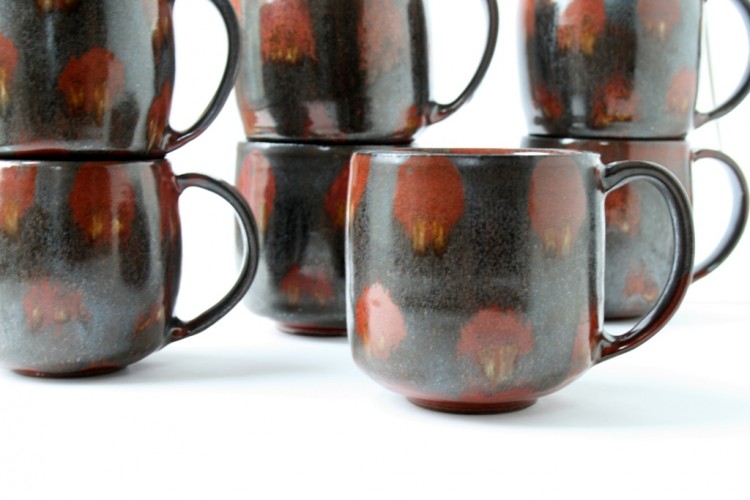
For this month’s Man Crafts feature, I had a really interesting talk with Robert Boyer, a talented ceramic-maker from Massachusetts. Robert is a man after my own heart – his day-job is very academic, so he uses his love of crafts as a creative outlet in his spare time. Alongside his work in scientific research, Robert has been running an Etsy store since 2013. I caught up with him to learn a little more about his shop, his passion for clay and his amazing ceramic artwork…
Man Crafts interview with Robert Boyer
Hello! Before we talk about your Etsy shop, tell me a little bit about yourself – where are you from and what are your interests outside of crafting?
I have lived in Boston, Massachusetts for about fourteen years. I originally moved to the city for graduate school and have spent most of my time here doing scientific research studying how the structures and patterns that exist at very small scales (think atoms and molecules) can help explain questions like “Why is one metal stronger than another?” or “Why are some fluids thicker than others?”.
You run a really cool Etsy shop – can you tell me a little bit about what you sell?
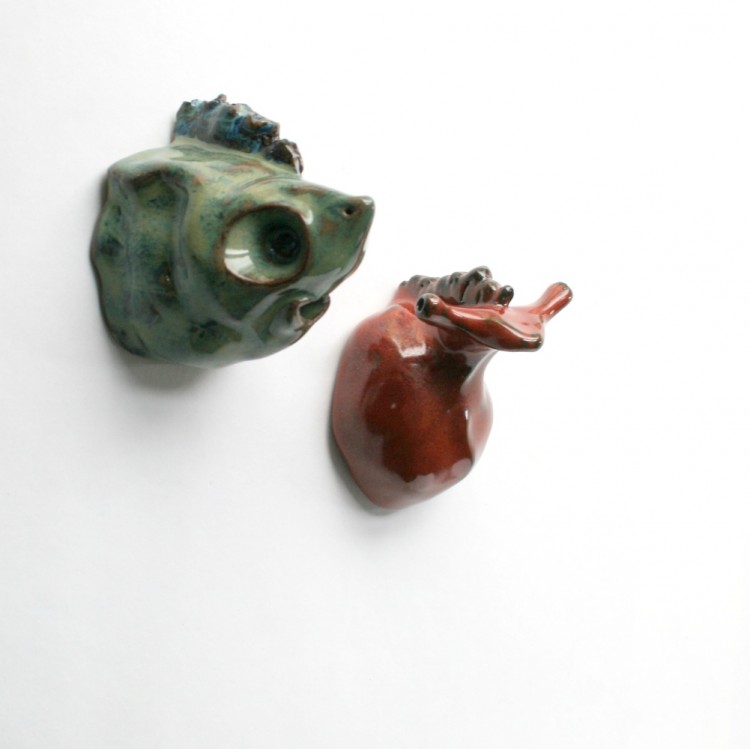
I sell a wide range of ceramic objects: from simple functional ware, like bowls and mugs, to art vessels and small sculptures. The common thread in much of my work is some sort of repetitive detail. I’m really interested in the way patterns of holes or glazes can transform the surface of a clay object. Even my little sculptures are produced by accumulating finger marks until a creature emerges from all of the little bumps and divots.

How did you first begin making these ceramic items?
Growing up I was introduced to a lot of different art (drawing, painting, needlecraft, pottery, etc. etc.) from family members and in school. It wasn’t actually until I began working on a graduate degree in the sciences that I started focusing a bit more on ceramics. I found that for me many of those other artistic mediums required the same sort of analytic, focused attention that I was burning up all day with class work and research. However, working with clay can be very tactile, and in grad school I made a lot of random shapes where my fingers were doing most of the thinking because my head was done for the day.
Tell me about your craft space, where do you make all of your items and what is the process involved?
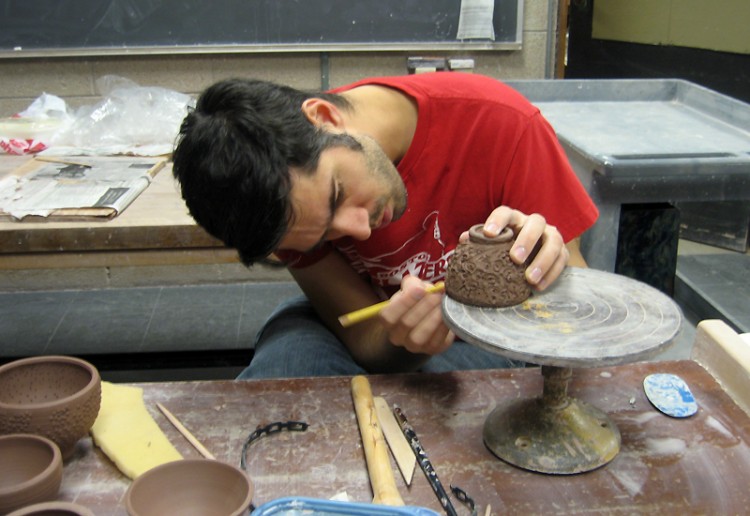
I work out of a community clay studio at the Massachusetts Institute of Technology that is composed of maybe one hundred students, alumni and staff. It is a fairly unique environment full of folks mostly in the sciences who have chosen clay as an outside pursuit. The processes in clay are fairly standard practice. Clay needs to be wedged or kneaded before it is used to remove air bubbles and to ensure uniform moisture. Once the piece is formed, it is dried out completely and then put into a kiln for the first time to drive off any last water and to begin the process where heat turns clay into a strong ceramic. Next, glazes or other finishes can be applied. These are essentially finely ground clay, glass and minerals in a slurry with water that melt onto the wall of the clay. The glaze melting and also some final transformation of the clay itself happens in the last step which is a second firing in the kiln… this time to an even hotter temperature.
Currently the majority of my pieces start out on a pottery wheel. A lot of my work will spend a day or more drying out before I begin poking and prodding the walls to alter the form or create some sort of pattern or texture. My textured work often gets just a single dip of glaze to provide color and sometimes to highlight the textures. Although my most recent body of work has involved layers of patterned glazes that do a bit of interacting and even move a little bit in the firing process.
What’s the best thing about running your Etsy store?
I think in any artistic endeavor there needs to be some point where you put the work in front of other people. It does not need to be about selling necessarily but about sharing what you are doing. I have really enjoyed the feedback I get from customers and even just folks who message me about the work I have made. Often interesting ideas and new directions for the work are sparked through these conversations. Having an outlet for the things I am making and the feedback loop of seeing what is purchased and the objects that interest people are the best parts of running the Etsy shop.
What advice can you offer any readers who are hoping to start their own craft business?
The best advice I can give is to just start now. My only real regret about my Etsy shop is that I thought about it for a couple of years before launching. If you want to be on-line, just post something. Your first attempt will not be perfect whether you do it today or in a year, but you will learn much faster and be more motivated if you have already launched out into the world. Having mediocre photos posted was the best possible motivation for me to learn better photography. Being asked by a potential customer about shipping outside my own country was the thing that made me interested in learning about international shipping.
I would probably add that in addition to starting now, it is important to keep learning and improving both the quality of your work and the quality of all aspects of your business once you have launched. Ultimately, the quality of what you produce and of the interactions you have with people are the things over which you have some control. You cannot make people buy your products or even force traffic through your shop, but you can work to make products people want to buy and a shop that people want to visit. It is best to focus on those things and let everything else fall into place.
And finally, let’s end on something fun – tell us one interesting fact about yourself or your shop!
I love to cook… I think most potters are into food and cooking. This year I have been learning to make pasta from scratch, mostly from videos posted by Italian grandmothers on the internet. It is funny how many of the skills I learned working with clay translate to pasta dough. Also, fresh pasta is amazing!
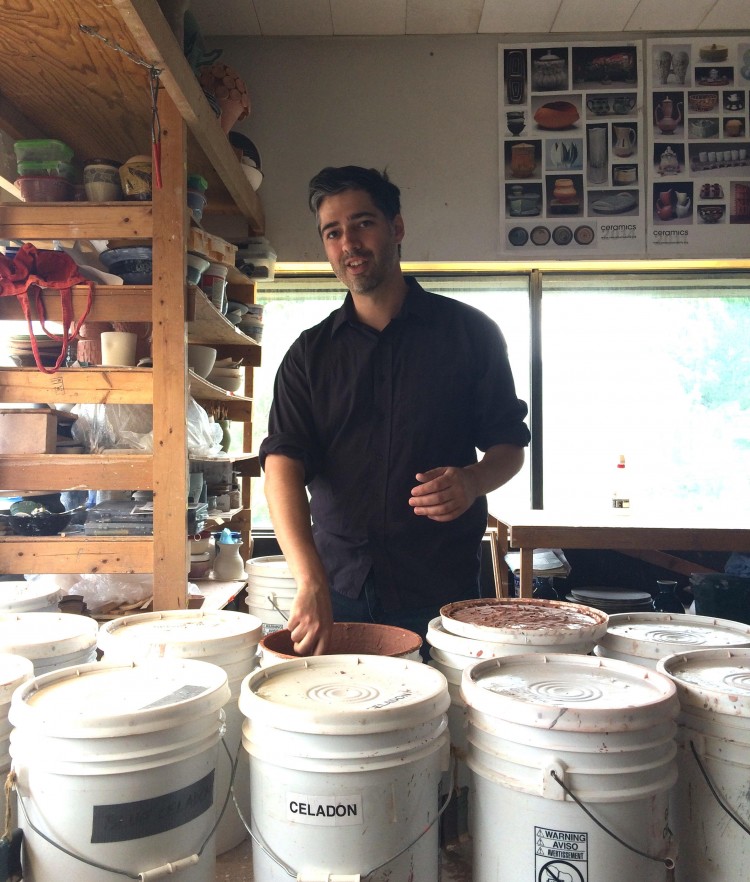
Thanks to Robert for sharing a glimpse into his ceramic world! You can see more of his work on Etsy, or follow him on Instagram. You can also read more of my interviews with crafty gents, over on the Man Crafts page.
If you’re a male maker who would like to be part of Man Crafts – get in touch! Drop me an email on thecraftygentleman@gmail.com.


1 Comment
August roundup | The Crafty Gentleman
August 31, 2015 at 2:01 pm[…] kicked off the month by chatting to Robert Boyer, to learn all about his ceramics business. I’m still a bit obsessed with his work – […]